

A proper home maintenance checklist UK homeowners can rely on should do more than list tasks. It should explain why each check matters, when it should be done, and how to spot early warning signs before damage spreads.
This matters even more in places like York. Many homes here are older, built with solid walls, ageing pipework, and limited ventilation by modern standards. Small issues rarely announce themselves. They show up as condensation, faint staining, or subtle movement that’s easy to dismiss.
In this guide, I’ll walk you through a clear home maintenance checklist by month, explain how much to budget for home maintenance, and show when it makes sense to use a home repair and maintenance service. Everything here is practical, tested, and written to help you stay ahead rather than react.
Why a Home Maintenance Checklist Matters for UK Homes
Most home problems do not arrive suddenly. They build quietly, one missed check at a time. A loose seal becomes damp. A small leak turns into stained walls. A simple checklist helps you notice changes early, before they cost real money or disrupt daily life.
In the UK, homes deal with constant weather pressure. Rain, cold, and humidity take their toll year after year. In York, especially, many properties are older and need closer attention. Regular checks protect comfort, safety, and long-term value.
Home maintenance is not about chasing perfection. It is about staying aware. When you spot issues early, you stay in control instead of reacting under stress.
How to Use This Home Maintenance Checklist by Month
A monthly checklist only works if it fits real life. Most people abandon maintenance plans because they feel too big or too technical. This one is designed to be light, repeatable, and realistic.
The purpose of a home maintenance checklist by month is not to complete jobs. It is worth noticing the change. When something looks, smells, or feels different, that is your signal to act or monitor.
Each month follows the same simple structure.
First, do a quick scan of safety and water-related risks. These cause the fastest damage when ignored. Second, check ventilation and moisture-prone areas. Third, glance at exterior drainage and surfaces when the weather allows.
You do not need tools for most checks. You need attention. A torch, a phone camera, and five to ten minutes per area are usually enough.
I recommend keeping a simple maintenance log. This is where most guides fall short. Write down:
- the date
- the room or area
- What you noticed
- whether it is new or repeating
Photos help. Patterns matter. If you see the same damp mark twice, it is no longer cosmetic. If a floor edge lifts again after drying, moisture is still present.
The checklist is organised monthly because homes behave differently across the year. Winter stresses heating and moisture control. Spring reveals water entry points. Summer highlights wear and surface damage. Autumn is your last chance to prepare before cold weather returns.
If something appears outside your comfort level, pause. Do not guess. Many problems look small but hide bigger causes. Repeated condensation or musty smells, for example, often require proper investigation and sometimes mould and damp removal in York rather than surface cleaning.
Used properly, this checklist keeps you informed without overwhelming you. It turns maintenance into awareness, not workload.
Monthly checks are about paying attention, not fixing everything. When you notice a change early, decisions become easier, and repairs stay manageable.
Home Maintenance Checklist by Month
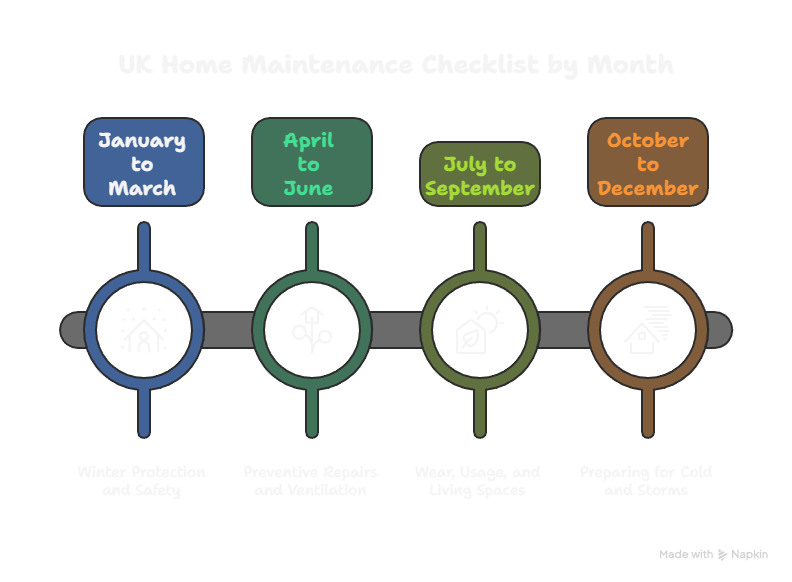
This is the heart of the guide. Each period reflects how UK homes actually behave across the year. Weather, usage, and wear all change. Your maintenance should change with them.
January to March: Winter Protection and Safety
Winter is when weaknesses show first. Heating runs constantly. Moisture builds indoors. Small failures become obvious if you look closely. These months are about safety, warmth, and preventing water damage.
Monthly checks
- Look for condensation on windows and cold walls
- Check ceilings and corners for early damp marks
- Test smoke and carbon monoxide alarms
- Monitor boiler pressure and heating consistency
- Inspect seals around doors and windows
If damp or mould keeps returning, surface cleaning is rarely enough. Persistent issues usually point to ventilation or moisture problems. This is where mould and damp removal in York can prevent more serious damage.
Winter checks protect health as much as the building.
April to June: Preventive Repairs and Ventilation
Spring is your recovery window. Winter damage does not fix itself. This is the best time to deal with problems before summer hides them again. Dry weather also makes inspections easier and more accurate.
Monthly checks
- Clear gutters and downpipes
- Check rooflines and external walls for cracks
- Inspect the bathroom and kitchen sealant
- Test extractor fans and airflow
- Look for slow leaks under sinks
Leaks caught early are usually simple to fix. Left alone, they soak materials and spread quietly. If you see staining or swelling, water leak damage repair in York should be addressed sooner rather than later.
Spring fixes are often the cheapest ones you will make.
July to September: Wear, Usage, and Living Spaces
Summer places different demands on your home. Windows open more. Floors take more foot traffic. Outdoor areas see heavy use. This is when wear becomes visible, even if problems feel less urgent.
Monthly checks
- Inspect flooring in high-traffic areas
- Check carpets for lifting edges or staining
- Look at vinyl and LVT for movement or gaps
- Inspect fences, paths, and drainage covers
- Watch for pests or nesting signs
Surface wear affects comfort and safety. Damaged flooring can also trap moisture underneath. If floors feel tired or unsafe, reviewing flooring services in York, including carpet installation or vinyl and LVT flooring, can restore both appearance and function.
Summer wear always tells a story. Pay attention to it.
October to December: Preparing for Cold and Storms
Autumn is your final chance to prepare before winter returns. Problems ignored here usually resurface during the coldest months, when fixes cost more and take longer.
Monthly checks
- Final gutter and drain clearing
- Bleed radiators before heavy use
- Check loft access points and insulation coverage
- Inspect exterior paint and exposed surfaces
- Test alarms again before winter
Cracked finishes and exposed masonry allow moisture inside. Addressing them early through exterior painting and decorating in York protects walls before freezing temperatures arrive.
Preparation is quieter than repair. It is also far cheaper.
The 15-Minute Monthly Check UK Homeowners Should Never Skip
If you do nothing else, do this. A short monthly check catches most issues before they turn costly. It works because it focuses on high-risk areas, not every corner of the house.
This check takes about fifteen minutes. It can be done any time of the month. Consistency matters more than timing.
Step 1: Water and moisture scan
Water causes more damage than anything else.
- Look under sinks and around washing machines
- Check ceilings for faint stains or colour changes
- Feel the skirting boards near bathrooms and kitchens
- Notice condensation patterns on windows
If stains grow or return after drying, the issue is active. At that point, water leak damage repair in York should be addressed early to avoid secondary damage.
Step 2: Ventilation and air movement
Poor airflow feeds damp and mould.
- Run extractor fans and check suction
- Look for black spotting on the sealant or the corners
- Notice lingering moisture after showers
Ventilation problems often show before mould appears. Acting early saves finishes and air quality.
Step 3: Heating and safety glance
You are checking the function, not the performance.
- Test smoke and carbon monoxide alarms
- Check boiler pressure visually
- Notice cold spots or uneven radiator heat
Step 4: Floors and finishes
Surface issues often hide moisture.
- Check flooring edges for lifting or softness
- Look for cracks that widen month to month
- Notice paint bubbling or peeling
Repeated surface failure usually means the underlying issue is unresolved. That is where professional repair beats repeated cosmetic fixes. Flooring and finishes may need assessment through flooring services in York or interior painting and decorating, but only after the cause is handled.
How Much to Budget for Home Maintenance in the UK
One of the biggest mistakes homeowners make is treating maintenance as an occasional cost instead of a predictable one. Homes do not fail randomly. They wear in patterns. Once you understand those patterns, budgeting becomes logical instead of stressful.
In the UK, and particularly in York, budgeting needs to reflect property age, exposure to moisture, and past maintenance habits. A single percentage rule does not account for solid walls, older pipework, or repeated damp history. A better approach is to budget by maintenance category, not guesswork.
A practical home maintenance budget breakdown (UK)
| Budget Category | What It Covers | Why It Matters |
|---|---|---|
| Routine servicing | Boiler servicing, minor plumbing, and ventilation cleaning | Prevents system failure and reduces emergency call-outs |
| Predictable repairs | Sealant renewal, small plaster repairs, and flooring wear areas | Stops small defects from becoming recurring problems |
| Preventative work | Gutter clearing, exterior sealing, draught reduction | Reduces water ingress and heat loss |
| Unexpected repairs buffer | Leaks, damp treatment, pipe failures | Keeps decisions calm when problems appear |
| Finish restoration | Decorating after repairs, flooring replacement | Restores surfaces properly after causes are fixed |
This structure works because it mirrors how homes actually deteriorate. Routine servicing keeps systems stable. Predictable repairs address wear before it spreads. Preventative work blocks common UK problems like damp and heat loss. The emergency buffer exists because even well-maintained homes experience surprises.
Where homeowners go wrong is skipping categories. Many spend repeatedly on redecorating without funding underlying repairs. Others keep no emergency buffer, which forces rushed decisions when leaks or mould appear.
A calm budget allows you to act early. For example, addressing moisture paths through property maintenance in York often reduces the number of trades required later. One targeted repair replaces several cosmetic fixes.
How to adjust your budget for York homes
Older York properties usually require a stronger preventative and repair allocation. Solid walls, older drainage layouts, and limited ventilation increase moisture risk. Newer homes may shift more budget toward servicing and finishes instead.
The goal is not to overspend. It is to spend once, properly, instead of paying repeatedly for the same issue.
Common Home Maintenance Problems UK Homeowners Ignore
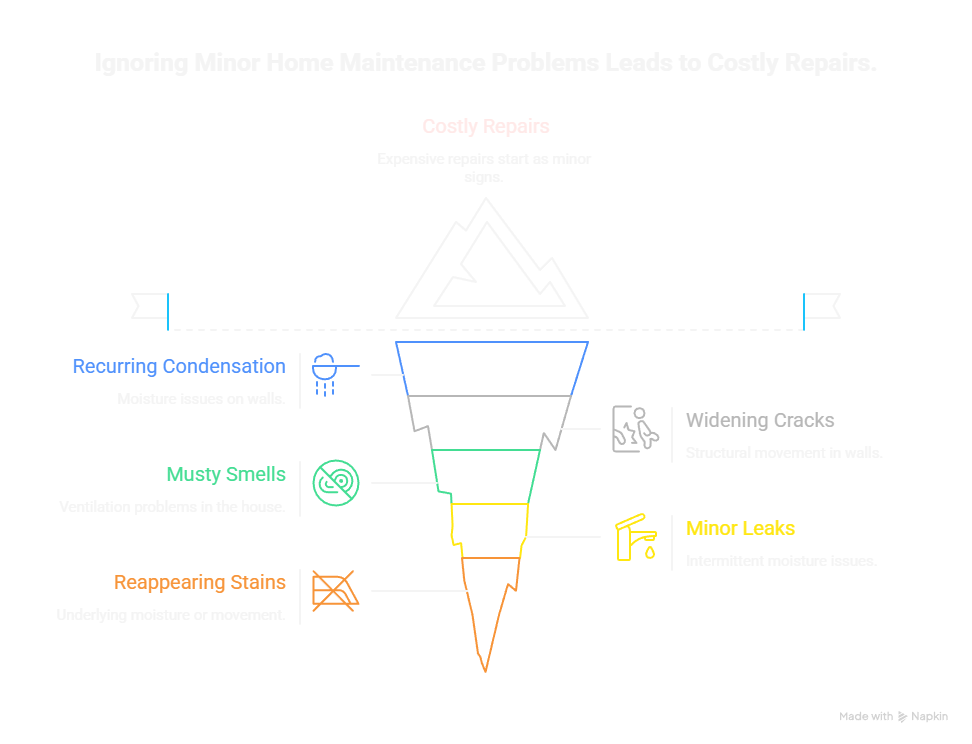
Some issues feel small until they are not. Many homeowners notice them, then delay action. This is rarely a good idea. The most expensive repairs usually start as minor signs.
These problems often repeat because the root cause is never addressed.
Commonly ignored warning signs
- Recurring condensation on the same walls
- Hairline cracks that slowly widen
- Persistent musty smells after cleaning
- Minor leaks that come and go
- Stains that reappear after repainting
These signs often point to moisture, movement, or ventilation issues. Cosmetic fixes hide them briefly. Proper solutions stop them long-term. This is why early action, including mould and damp removal in York, saves far more than it costs.
Small warnings deserve serious attention.
DIY vs Professional Help: Knowing Where the Line Is
DIY maintenance has value, but only when it is used for the right purpose. In professional property care, DIY is a diagnostic tool, not a repair strategy. Its job is to spot change early, not to solve complex building problems.
The real risk comes when homeowners persist with DIY after warning signs repeat. At that point, the issue is no longer surface-level. It is structural, moisture-related, or systemic.
What DIY is genuinely good for
| DIY Task | What It Helps You Detect | Why It’s Safe |
|---|---|---|
| Visual inspections | New stains, cracks, and lifting floors | No intervention, just observation |
| Cleaning and monitoring | Recurring mould or damp patterns | Reveals repetition, not causes |
| Alarm testing | Safety system reliability | Simple, low risk |
| Ventilation checks | Poor airflow and moisture buildup | Early prevention |
| Logging issues | Patterns over time | Supports better decisions |
DIY works best when it increases awareness. It helps you recognise when something changes and whether it repeats. That information is extremely valuable when professional help is needed.
Where DIY stops being effective
Once problems repeat, DIY often delays proper repair instead of saving money.
| Warning Sign | What It Usually Means | Why DIY Fails |
| Damp returns after cleaning | Active moisture source | Surface treatment hides symptoms |
| Mould regrows in the same area | Ventilation or leak issue | Cleaning does not stop moisture |
| Flooring lifts again | Subfloor moisture | Drying alone never solves it |
| Cracks widen over months | Movement or saturation | Filler masks the structural cause |
| Paint bubbles repeatedly | Water behind surfaces | Repainting traps moisture |
At this stage, continuing DIY increases total cost. Repainting, resealing, or drying without addressing the cause leads to repeated failure. This is where professional intervention saves money, not spends it.
Services such as water leak damage repair in York or mould and damp removal focus on stopping the source first, then restoring finishes correctly.
The smart handover point
DIY should stop when:
- The same issue appears twice
- damage spreads to new areas
- finishes fail despite recent work
Professionals diagnose causes. DIY only reveals symptoms. Using both at the right time keeps repairs limited and budgets intact.
When to Use a Home Repair and Maintenance Service in York
Some homes need more support than a checklist can offer. That is not failure. It is reality. Busy households, older properties, and rental homes often benefit from regular professional oversight.
In York, many homes have unique layouts and ageing materials. These need experience, not guesswork.
A maintenance service makes sense if:
- Issues keep returning despite DIY efforts
- You want problems solved properly once
- You manage a rental or shared property
- Time and access are limited
Combining routine checks with professional care creates balance. It keeps your home functional without constant worry. You can learn more about our approach on the about us page or see real results in our project gallery.
Support should feel reassuring, not intrusive.
Final Thoughts: Staying Ahead of Repairs
Home maintenance is not about constant work. It is about awareness. Short, regular checks protect comfort, safety, and value far better than reactive repairs ever will.
If you want to explore more practical guidance, you can browse our blog or reach out through the contact page when support is needed. Our terms of service and privacy policy are always available for clarity.
Well-kept homes reward attention quietly, over time. That is the goal.


