
When it comes to home renovation or simply refreshing a room, plaster walls often present a unique challenge. If you’ve recently had plaster applied or are considering painting over old plaster, you may be wondering: can you paint on plaster? Is it safe, and what do you need to know to get the best results?
In this guide, we’ll explore the essential steps of how to paint fresh plaster, how long to leave plaster before painting, and the best practices to follow to ensure a flawless finish.
Can You Paint on Plaster?
Yes, you can paint on plaster—but it’s important to understand that plaster needs proper preparation before you can apply paint. Unlike drywall or other types of surfaces, plaster requires a bit more attention to ensure the paint adheres properly and the finish lasts. Whether you’re dealing with fresh plaster or painting over old plaster, knowing the proper methods can make all the difference.
Before diving into how to paint fresh plaster, it’s crucial to understand the proper drying time and how to prepare the surface. Applying paint to plaster too soon or without proper preparation can lead to peeling, cracking, or uneven finishes.
How to Paint Fresh Plaster
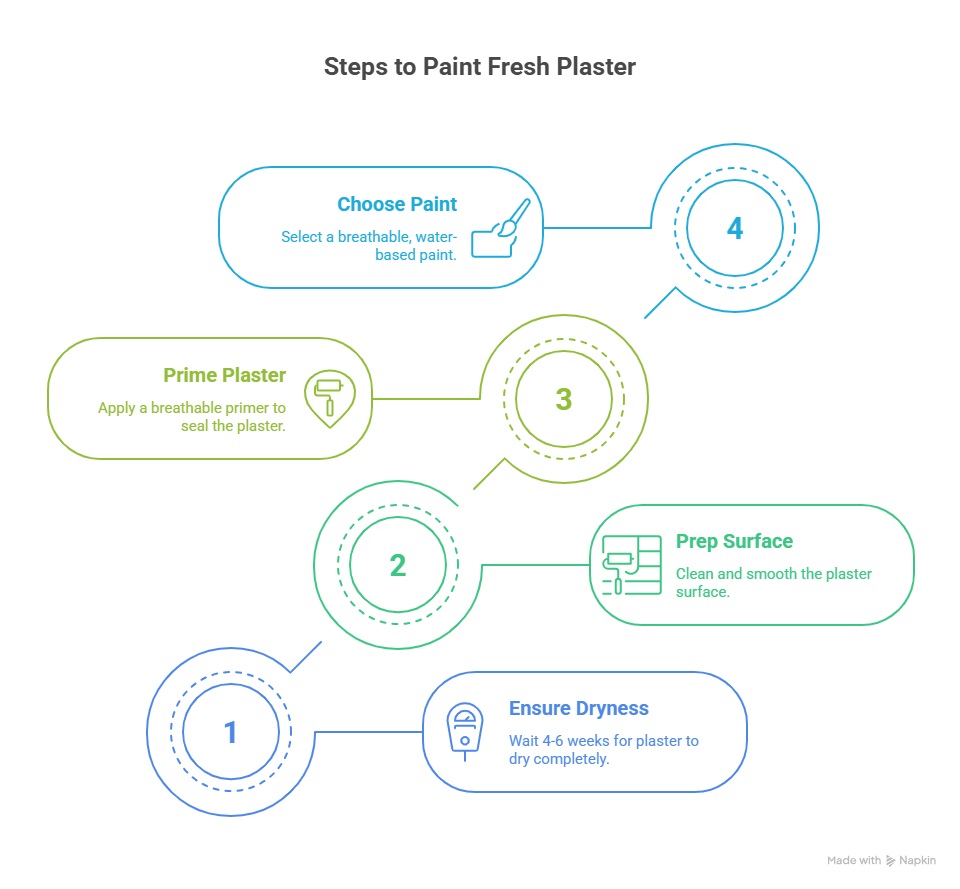
Painting fresh plaster can be a straightforward process if you take the right steps. Here’s a quick overview of the essential stages:
1. Ensure the Plaster is Fully Dry
One of the most common mistakes people make when painting fresh plaster is trying to paint it before it’s dry enough. Fresh plaster can take several weeks to dry completely, depending on the thickness and humidity. How long after plastering can you paint? In general, you should wait at least 4 to 6 weeks for the plaster to fully dry before applying any paint.
However, you’ll also want to check for any signs that the plaster is dry by using a moisture meter or conducting the “tape test.” If you press a piece of clear plastic or tape against the plaster and condensation forms underneath, it’s still too moist to paint.
2. Prep the Surface
Before you start painting, make sure the surface is clean and free from any dust, debris, or grease. A clean surface ensures that the paint adheres well and prevents any imperfections. Use a damp cloth to wipe down the plaster walls and allow them to dry completely.
Next, you’ll need to smooth out any imperfections in the plaster. If you notice any cracks or holes, fill them with a plaster repair compound, and once dry, sand the patched areas to achieve a smooth surface.
3. Prime the Plaster
The next step is to apply a primer designed for fresh plaster. Priming is crucial because it seals the plaster, improves paint adhesion, and prevents the paint from soaking into the porous surface. A breathable primer is ideal, as it allows the plaster to release moisture while still providing a solid base for the paint.
You can either choose a matt primer or a polymer-based primer, depending on your preference for finish and the type of paint you’re using. Apply a thin layer, and allow it to dry thoroughly before moving on to the painting process.
4. Choose the Right Paint
When selecting paint for fresh plaster, opt for a water-based paint that is breathable and flexible. Acrylic paints are commonly recommended for plaster walls because they allow the surface to breathe while providing good coverage and durability. Matte or flat finishes are typically the best choice for plaster, as they help to hide imperfections and provide a traditional look. If you prefer a more glossy finish, you can choose a satin or eggshell finish.
How Long After Plastering Can You Paint?
The time you need to wait before painting plaster largely depends on the environment and plaster thickness. Generally, fresh plaster should be left for at least 4 to 6 weeks to allow it to dry completely. Factors like room temperature and humidity can affect drying time:
- Warm, dry environments can speed up the drying process.
- Cold, damp environments may prolong the drying time.
To speed up the drying process without compromising the quality of the plaster, ensure that the room is well-ventilated. You can also use a dehumidifier or heaters to help the process along.
How Long to Leave Plaster Before Painting
It’s essential to leave fresh plaster to dry completely before painting. As mentioned earlier, waiting 4 to 6 weeks is generally the rule of thumb. However, you should always check the moisture levels in the plaster to be sure it’s ready. Applying paint to plaster that is too wet can lead to issues like poor adhesion, peeling, or blistering.
Even after the plaster has dried for several weeks, make sure to test the surface by feeling it. If it feels damp or cool, it’s still too early to paint. Patience is key here to avoid a compromised finish.
Tips for a Successful Paint Finish on Plaster

Now that you understand the basics of when and how to paint plaster, here are a few extra tips to help you achieve a professional, long-lasting finish:
1. Use a High-Quality Paint and Tools
Choose high-quality paint designed for plaster. Avoid using cheap paints, as they may not adhere well to the surface or provide adequate coverage. Use a good-quality brush or roller designed for textured surfaces to ensure an even application.
2. Don’t Skip the Primer
Priming plaster is a vital step. Don’t skip this, as it ensures that the paint will adhere well and stay on the surface for longer. It also helps prevent uneven absorption of paint.
3. Allow Adequate Drying Time Between Coats
If you’re applying multiple coats, be sure to allow sufficient drying time between layers. This will help the paint adhere properly and give you a smoother finish. Typically, you should wait 2 to 4 hours between coats, depending on the paint manufacturer’s instructions.
4. Apply Thin Layers
Instead of applying thick coats of paint, it’s better to apply several thin layers. Thin layers dry faster and tend to result in a smoother, more even finish.
Final Thoughts
If you’ve been wondering, “can you paint on plaster?”, the answer is yes, but with the right preparation. Patience is key, as waiting the appropriate amount of time for plaster to dry and ensuring proper surface preparation can make all the difference. With the correct techniques, including priming and selecting the right paint, you can successfully paint fresh plaster and enjoy a long-lasting, beautiful finish.
For those who aren’t comfortable with the painting process or need additional help, SDM Interiors offers expert plastering and painting services. Whether you need assistance with preparing fresh plaster or ensuring your walls are properly painted, our team is here to help.
📍 Find us on Google Maps for more details, or check our business listing to see how we can assist with your home renovation projects.


